What is a Smart Home Panel and How Does It Work?
The rise of smart home technology has transformed how we interact with our living spaces. A Smart Home Panel serves as a central hub for controlling various smart devices, enhancing convenience and energy efficiency. According to a report by MarketsandMarkets, the smart home market is expected to reach $135 billion by 2025, reflecting a significant shift in consumer behavior.
These panels simplify the management of different home systems, from lighting to climate control. Users can adjust settings with just a tap or voice command. However, the technology's complexity can sometimes overwhelm users. Not everyone feels comfortable navigating these systems, which can lead to frustration.
Moreover, concerns around security and data privacy remain prevalent. Past breaches have shown that connected devices can be vulnerable. Trust in smart home technology must be built over time. Despite these challenges, the Smart Home Panel continues to hold promise, changing how we experience our homes for the better.
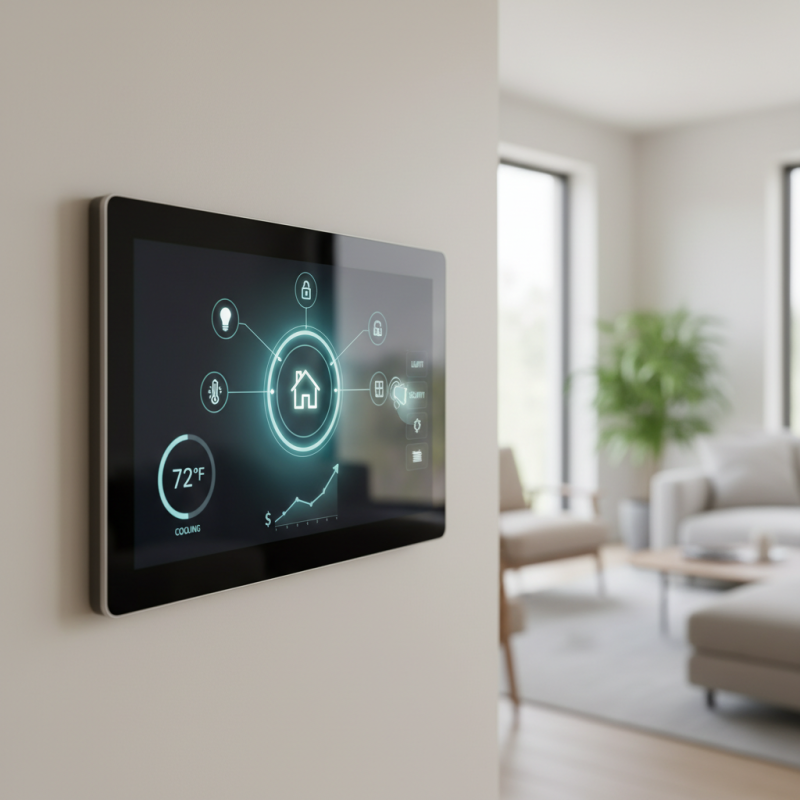
Understanding the Definition of a Smart Home Panel
A smart home panel serves as a central hub for managing various smart devices within a home. It enables homeowners to control lights, thermostats, security systems, and more. These panels often feature touchscreens, allowing for straightforward interaction. Their interfaces are designed to be user-friendly, appealing to both tech-savvy users and those less familiar with technology.
Understanding a smart home panel involves recognizing its functionality. It collects data from connected devices and presents it in an organized manner. Homeowners can customize settings based on preferences. For example, an energy-saving mode can be activated for specific times of the day.
However, challenges exist. Not all devices are compatible with every panel. This can lead to frustration when trying to integrate newer technology. Additionally, the interface may overwhelm users who are not accustomed to smart technology. Ensuring ease of use remains a critical factor for adoption in many households.
Key Features of Smart Home Panels Explained
Smart home panels serve as the central control hubs for various connected devices in a modern home. These panels enable users to manage lights, thermostats, security systems, and more, all from one streamlined interface. The ease of access is a key feature that enhances user experience. Touchscreens often display real-time information, making it simple to monitor home conditions at a glance.
Another important aspect is integration. Smart home panels connect with multiple devices seamlessly. This interoperability allows users to create custom routines, such as turning on lights at sunset or adjusting the thermostat while away from home. Compatibility with voice assistants adds another layer of convenience. However, potential users should consider the learning curve involved in setting up such systems.
Data privacy is also a concern. Many smart panels collect user data to enhance functionality. This can lead to vulnerabilities if not managed properly. Additionally, the technology can sometimes face glitches or compatibility issues with older devices. Evaluating these factors is crucial for anyone looking to adopt smart home technology. Understanding these insights can improve decision-making in creating a connected home.
How Smart Home Panels Integrate with Other Devices
Smart home panels serve as central hubs for managing various smart devices in a home. They communicate using various protocols like Wi-Fi, Zigbee, or Z-Wave, offering seamless integration. This allows homeowners to control everything from lights to security systems with a single interface. The ease of control simplifies daily routines, but depending on the system can involve a learning curve.
When integrating smart devices, compatibility is critical. Some panels may not support all device types, leading to frustration. Researching compatible devices before purchasing is advisable. Ensure the panel can handle different protocols; this enhances functionality. Testing multiple setups can also reveal which combinations work best.
Tip: Consider starting with a basic setup. Gradually add devices as needed. This approach helps in identifying which devices truly enhance your daily life.
It's essential to acknowledge that not all smart home setups are user-friendly. Juggling various apps or interfaces can disrupt the convenience a smart home aims to provide. Be prepared for occasional technical challenges, and have a troubleshooting plan ready.
Operational Mechanisms of Smart Home Panels
Smart home panels serve as the nerve center of modern smart homes. They integrate various smart devices into a cohesive ecosystem. This allows users to control lighting, heating, and security systems from a single device. According to a 2023 report by MarketsandMarkets, the smart home market is projected to reach $174 billion by 2025, highlighting the growing interest in these technologies.
Operational mechanisms of smart home panels revolve around connectivity and automation. Most panels utilize Wi-Fi, Zigbee, or Z-Wave protocols to communicate with devices. A Consumer Electronics Association study found that 76% of households believe smart home technology simplifies their lives. However, challenges remain in consistency and compatibility between different devices from various manufacturers. This can lead to frustration for users, as seamless integration is not always guaranteed.
The user interface plays a critical role. It must be intuitive and responsive. Yet, many panels fall short on usability metrics. For instance, a user might struggle to set up routines or navigate settings. Reports suggest that 30% of users abandon smart home setups due to complexity. Addressing these issues is crucial for enhancing user experience and achieving the full potential of smart home technologies.
Benefits of Using a Smart Home Panel for Automation
A smart home panel is a central hub that connects various smart devices. This technology optimizes home automation in ways that enhance convenience and security. With a few taps, users can manage lights, thermostats, and security cameras. However, it also requires a stable internet connection for seamless functionality. Not all homes have the same level of connectivity, which can be challenging.
The benefits of using a smart home panel are notable. It consolidates control, which reduces the need for multiple apps. Besides, automation improves energy efficiency. For instance, scheduling devices to operate at specific times can lower energy bills. Yet, some users may find the learning curve to set up automation a bit daunting. Understanding how to utilize all features can take time and effort.
Moreover, the integration of multiple devices might lead to compatibility issues. Sometimes, devices from different manufacturers do not sync well with each other. This inconsistency can be frustrating. Nevertheless, a smart home panel simplifies the user experience overall, making daily routines more manageable. The potential for personalized automation encourages users to explore and enhance their homes smartly.
What is a Smart Home Panel and How Does It Work? - Benefits of Using a Smart Home Panel for Automation
| Feature | Description | Benefits |
| User Interface | Centralized touch screen for managing smart home devices. | User-friendly control, simplifying operations for all household members. |
| Device Integration | Connects various smart devices into one ecosystem. | Improves interoperability and functionality of smart devices. |
| Automation | Allows setting routines and schedules for devices. | Enhances convenience and energy efficiency. |
| Remote Access | Control smart devices remotely via smartphone apps. | Increases security and defines control from anywhere. |
| Energy Management | Monitors and optimizes energy usage of devices. | Reduces energy costs and environmental impact. |