How to Choose the Right Fiber Optic Connectors for Your Needs?
In today's fast-paced digital world, choosing the right Fiber Optic Connectors can significantly impact performance and reliability. Market reports suggest that the global fiber optic connector market will reach $2.12 billion by 2027, as the demand for high-speed internet grows. This growth highlights the importance of making informed decisions regarding fiber optic connectors.
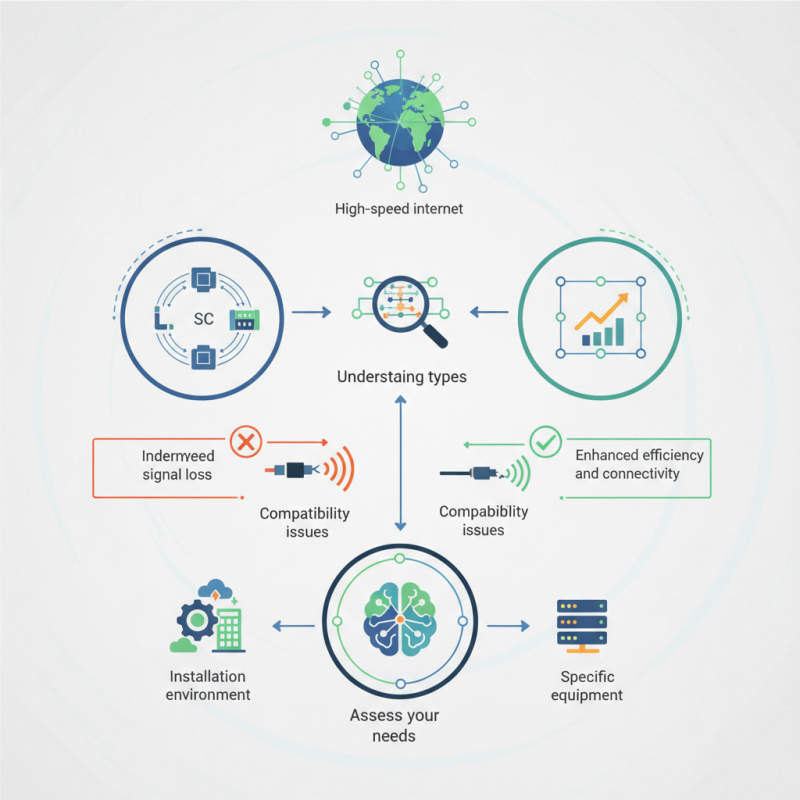
Selecting the appropriate connectors involves understanding various types, including LC, SC, and MTP. Each type has specific characteristics suited for different applications. However, choosing the wrong connector can lead to signal loss or compatibility issues, which can hinder overall network performance. For instance, a misaligned connector may lead to increased insertion loss, wasting resources and time.
Additionally, factors such as installation environment and the specific equipment used play crucial roles. A fiber optic connector that works in one scenario may not be suitable in another. Therefore, it is essential to carefully assess your needs and consider potential limitations. Embracing a well-informed selection process can greatly enhance network efficiency and connectivity, ultimately supporting the burgeoning demands of today's technology landscape.
Understanding Different Types of Fiber Optic Connectors Available
When selecting fiber optic connectors, it’s essential to understand the various types available. This knowledge will guide you toward the right choice for your specific application. Common types include SC, LC, ST, and MTP/MPO connectors. SC connectors are popular due to their reliability. LC connectors are smaller, making them suitable for high-density installations. ST connectors are known for their bayonet-style locking mechanism.
MTP/MPO connectors support multi-fiber connectivity, allowing for efficient data transmission. Each type has its unique benefits and challenges. For instance, LC connectors can be tricky to handle without proper training. ST connectors may experience issues in environments with high vibration. Your decision should consider factors such as space, usage frequency, and required performance.
Avoid common pitfalls by researching detailed specifications. Ensure compatibility with existing hardware. Consider future scalability, too. The wrong connector choice can lead to inefficiencies. Mistakes here can disrupt network performance. Remember, choosing the right connector is crucial for sustaining a reliable fiber optic network.
How to Choose the Right Fiber Optic Connectors for Your Needs? - Understanding Different Types of Fiber Optic Connectors Available
| Connector Type | Description | Typical Use Cases | Advantages | Disadvantages |
| SC | Square connector with a push-pull mechanism. | Telecommunications, Data Centers | Easy to use, low cost | Bulky size |
| LC | Compact connector with a locking mechanism. | High-density areas, Networking | Space-saving, reliable connection | Can be tricky to handle |
| ST | Connector with a bayonet-style coupling. | Legacy networks, Security systems | Durable, easy to connect | Larger than modern connectors |
| MPO/MTP | Multi-fiber connector for high-density applications. | Data Centers, High-speed networks | Supports multiple fibers, compact design | Complexity in installation and alignment |
| E2000 | Connector with a spring-loaded shutter for protection. | FTTH, Telecommunications | High performance, good protection | Higher cost |
Evaluating Connector Specifications and Compatibility with Your Devices
When selecting fiber optic connectors, compatibility is essential. Different devices may require specific connectors. Always check the specifications of your equipment. This can save time and prevent frustration down the line.
Tip: Look at the connector type. LC, SC, and ST are popular options. Ensure your equipment supports the chosen type. Use an online compatibility tool if you’re unsure. It can help clarify any doubts you may have.
Connector specifications matter. Pay attention to factors like insertion loss and return loss. These details indicate how well the connector performs. A lower insertion loss means better signal quality. Yet, finding the perfect connector for every scenario can be tricky.
Tip: Balancing cost and performance is vital. Sometimes, cheaper connectors compromise quality. Research thoroughly before making a decision. Look for user reviews that highlight real experiences. Avoid connectors that consistently receive negative feedback.
Factors to Consider: Performance, Cost, and Installation Ease
When selecting fiber optic connectors, three key factors come into play: performance, cost, and installation ease. Performance is crucial. High-quality connectors can significantly reduce signal loss. According to the Fiber Optic Association, connectors with less than 0.5 dB of insertion loss are ideal. This means minimal impact on your network’s overall efficiency. However, connectors that meet this standard often come at a higher price, which is an essential consideration for budget-conscious projects.
Cost cannot be overlooked. While investing in premium connectors can ensure high performance, it may stretch budgets. Many options are available, with budget connectors often priced 40% lower. However, they might lead to higher maintenance costs due to reliability issues. In a recent study, it was noted that 30% of fiber optic failures can be attributed to poor quality connectors. This statistic raises questions about long-term investments in lower-cost options.
Installation ease is a vital aspect as well. Some connectors require specialized tools and skills for installation. Others are designed for quick and straightforward setups. A survey revealed that 60% of technicians prefer connectors that can be easily installed without extensive training. Complicated installations can delay projects and lead to error-prone setups. Reflecting on these factors can guide you to make an informed decision based on your specific needs.
Fiber Optic Connector Performance Analysis
Assessing the Environment for Connector Suitability and Durability
When choosing fiber optic connectors, the environment plays a crucial role. Connectors need to withstand various challenges. Factors like humidity, temperature, and exposure to dust are significant. In outdoor settings, UV exposure must be considered. Connectors that can handle these elements will last longer and perform better.
Durability depends on materials and design. For example, rugged connectors often use robust plastics or metal housings. They resist impacts and physical stress. But not all durable options suit every purpose. For instance, a heavy-duty connector may not fit well in tight spaces. Each situation requires careful thought.
Assessing your specific environment can reveal flaws in generic choices. Poor fitting can lead to performance drop. Always consider factors like installation ease and maintenance. Sometimes, the ideal connector is not the most obvious option. Reflecting on these details can save future troubles. A little extra research can make a difference.
Best Practices for Maintaining and Upgrading Fiber Optic Connectors
Maintaining fiber optic connectors is key to a reliable network. Regular cleaning is crucial. Use a lint-free cloth and specialized cleaner to remove dust or smudges. Connectors can collect debris easily. Even a small particle can disrupt your signal. Inspect connectors visually. Look for scratches or damage. These imperfections might seem minor but can affect performance.
Upgrading fiber optic connectors can enhance your system's efficiency. Consider the type and speed required for your network. Choose connectors that match the latest standards. This helps avoid compatibility issues. However, the upgrade process isn’t without challenges. It may involve rewiring or system downtime. Plan accordingly to minimize disruptions. Test the connections after upgrading. This ensures they meet your performance needs.
Lastly, educational resources can help you. Stay informed about best practices. Attend workshops or webinars for guidance. However, the knowledge gained may feel overwhelming. Don't hesitate to reach out for expert advice. Seeking help can clarify the complicated aspects of fiber optics. Embrace the learning curve, and be proactive in your maintenance efforts.